
Via Veloce by Wille R. www.veloce.se since November 1995 and still here.
 Back
to FAQ. First published
Nov 1997
Back
to FAQ. First published
Nov 1997  Next
Next
Alfa Romeo Duetto 1966 -
1969 FAQ
--
The rear-view mirror, fender or door?
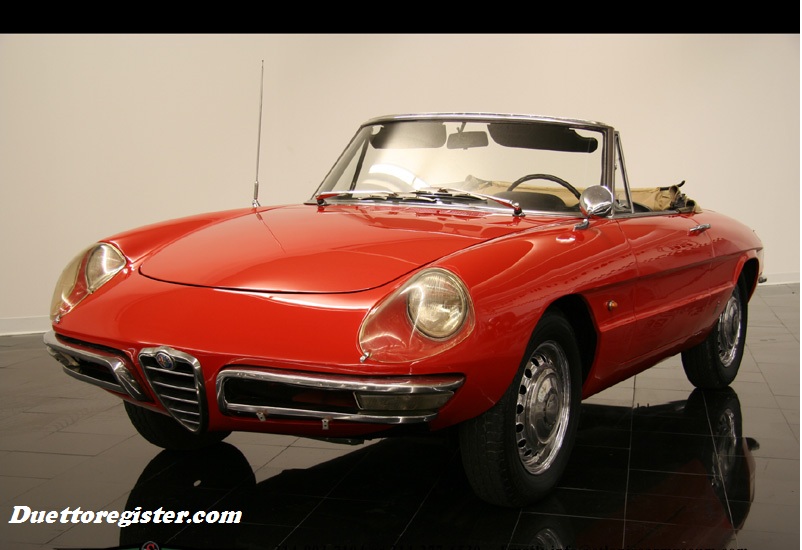
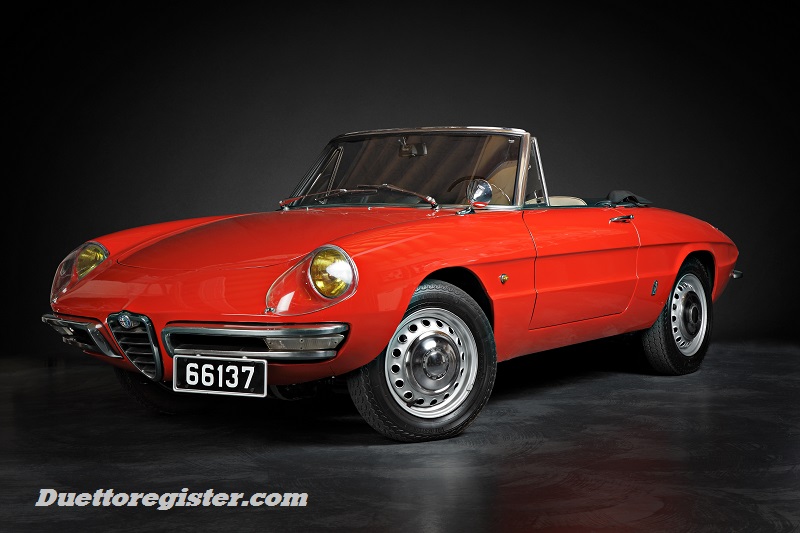
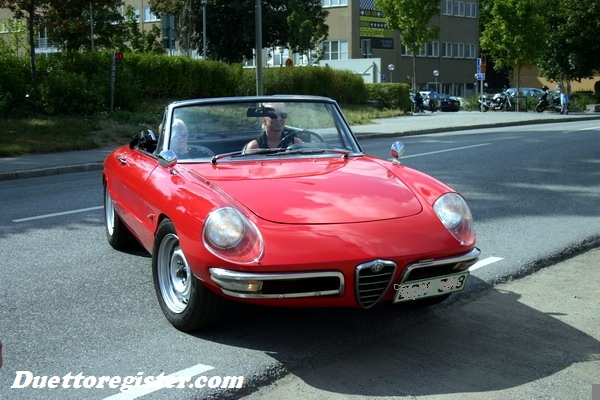
The Duetto should correctly have a single shallow-bullet circular chrome rear-view mirror placed on the front wing on the driver’s side
. A position that was sometimes criticised because you had to look through the quarter light to see it, and could not adjust it from the driver’s seat. Even the 1:8 modelo has the mirror on the fender. In some countries, like Sweden, it was mandatory to have two mirros. So, the very early Duettos in Sweden had them on the fenders. The right one needed to have two person adjusting it. So, Swedish owners moved the to the doors instead. Not me though.The Alfabb confirms many Duetto owners having the holes on the fender welded. From factory the Duettos had the mirror on the door in mid 1966, but as always there were alot with the fender positioned mirror. The 1750 Veloce Euro had the same, but the 1750 US version got the mirror on the door from the beginning.
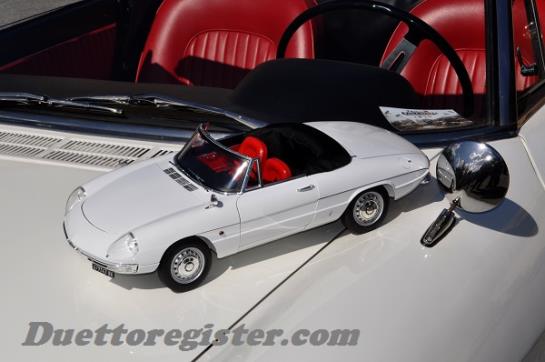
The position on my 1967, original status.
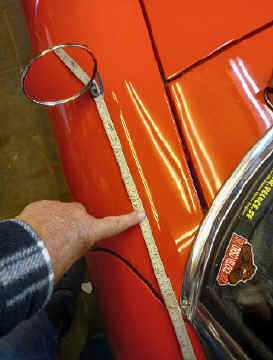
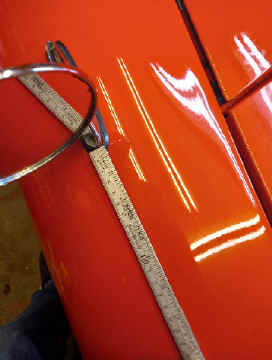
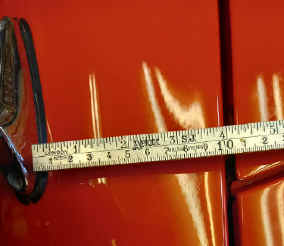
350 mm from mirror to door gap. 100 mm from mirror to bonnet edge.
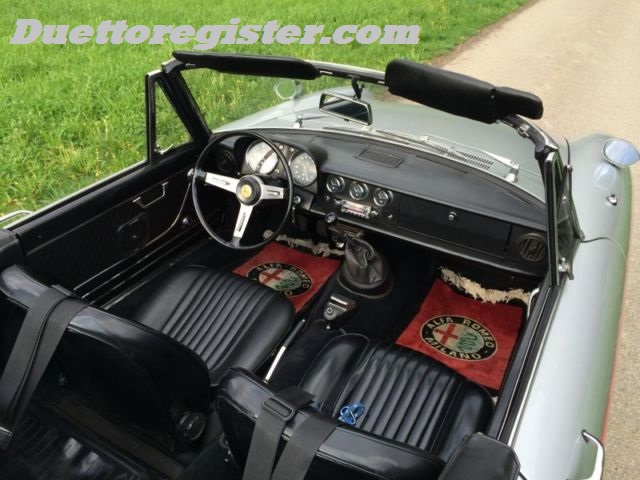
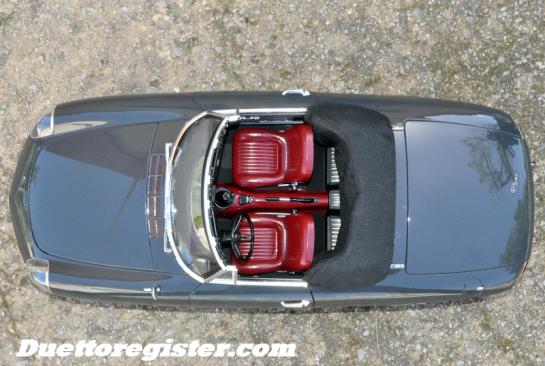
More photos of the fender mirror.
If you have any comments, please send an E-mail
 Top
Top